
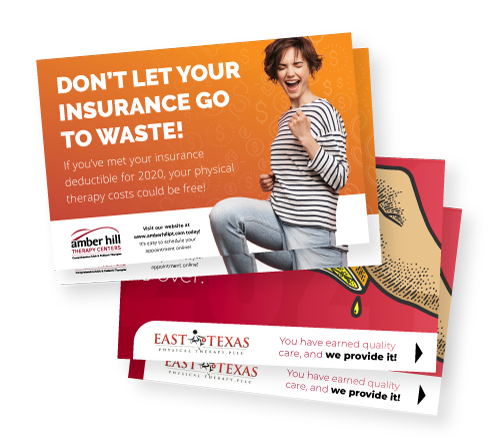



Do you need more physical therapy referrals…but don’t want to break the bank to get them?
We get it. Inflation may tempt you to cut your marketing budget. But that would just hamstring your ability to get more new patients. What you should do is invest your marketing budget in the cost-effective marketing strategies, so you get more bang for your buck.
The most cost-effective marketing strategy is boosting physical therapy referrals. That’s because referrals typically generate…
- 18% more loyalty
- Have a 16% higher lifetime value
- And over a 13% higher spend rate per-person
…and they enjoyed a 425% increase during lockdowns, it’s hard not to like them!
Boosting your business is absolutely within your control, and it starts with developing an effective physical therapy referral system for both doctors and patients.
How to Get More Physical Therapy Referrals From Doctors
In an ideal world, doctors and physical therapists fit together like hand and glove. Each deals with a different aspect of healing and wellness. They don’t compete with one another. Rather, they complement one another. Unfortunately, doctor referrals to PT have dropped 55% in the last decade.
But you still can’t ignore physical therapy doctor referrals for your clinic. In this section, we look at four of the most effective ways to elicit referrals from doctors.
1. Make It EASY to Give You Referrals

Before you contact any physicians as part of your physical therapy referral marketing program, first create a solid referral program. Assign someone in your office to be in charge of increasing physician referrals (and patient referrals for that matter, too). Check in regularly with doctors who refer to you.
A missed referral appointment may be impossible to reschedule until months down the road, so make sure you have an air-tight way to capture referrals and to move them through your system.
Don’t allow your referral program to align with the statistical norm, where only 35% of referrals turn into appointments.
2. Practice Networking to Get More Doctor Referrals
As the owner of your physical therapy clinic, it’s important that it be you who sets up in-person meetings with the doctors in your area. Although your marketing coordinator or office manager will likely take care of tasks once things get rolling between you and the doctor, the doctor needs to know who you are before he or she gets to know anyone else.
After all, you’re asking the doctor to refer patients to you, often when they’re in their most vulnerable state, so getting to know you and feeling comfortable with you is critical.
Here are a few tips for getting physical therapy referrals from doctors:
- Try sending out postcards and MD newsletters to physicians you’d like to get to know better. (Do this before you cold call them to try to set up an appointment.) Statistically speaking, you have a better chance of them reading your print mail than you do having them read your email. Your beautifully-designed postcard or physician newsletter could be just the icebreaker that you need to set up an appointment down the road.

- At your first face-to-face meeting, introduce yourself in a brief bio statement, using talking points to establish your expertise. Position yourself as an expert by highlighting your education, your experience, and your areas of professional interest.
- Support your talking points with marketing materials, like informational postcards, brochures, and newsletters filled with helpful content.
- Keep it short. The doctor is busy, and more importantly, it takes time to build a true connection with someone. Things should flow easily and naturally. You can always set up a longer meeting in the future, after you’ve broken the ice.
- Send a follow-up postcard expressing your thanks to the doctor (and a basket of goodies to the front desk staff). Follow up with phone calls and more correspondence down the road. Drop off samples of your brochures and newsletters for their waiting room.
For tips on how to prepare physical therapy marketing collateral for meetings with physicians, see No. 4 on this list.
3. Offer Big Benefits With Post-Surgical Physical Therapy
Many surgeries automatically require physical therapy afterwards in order to help the patient recover. As such, surgeons play an important role in your physical therapy marketing strategies.
To get started, make a list of the surgeons in your area. The list might include physicians who perform surgery for:
- Shoulder and back injuries
- Foot, ankle, and knee problems
- Cancer recovery
- Hip and knee replacements
Once you have a list of surgeons in your area, follow the tips in section No. 1 to make contact with them. Invite them to network. Send them postcards and physician mailers. Ask if they’d like to be put in your newsletter list.
On a related note, your physical therapy marketing materials should always reflect your expertise in post-surgical care. For example, do you have a high success rate with helping patients after knee-replacement surgery? Do you specialize in post-laminectomy care? If so, then make sure that information is in your marketing materials.

4. Get More Physical Therapy Referrals With Print Marketing
Given the proliferation of digital advertising media these days, you’d be forgiven for thinking that good old-fashioned print marketing has gone the way of the dinosaur. Nothing could be further from the truth.
For many PTs, postcard and newsletter marketing plays such a big role in their physical therapy marketing plans that their businesses start to take a nosedive when they stop sending postcards out. Direct mail marketing is that important.
And in many respects, physical therapy marketing collateral like:
- Physician newsletters
- Postcards for physicians
- Marketing brochures
- And other mailables, like lead generation cards
…are more effective marketing tools than their digital counterparts.
Here are some stats you should know about:
- If you send an email, it’ll only get read about 30% of the time.
- If you send a postcard or a newsletter, you have a 90% chance of it getting read.
- More than 80% of millennials view print mail as more truthful than other types of advertising.
- What’s more, studies show that the human brain responds 60,000X faster to images than it does text. Beautifully-designed postcards and newsletters can give you a significant leg up in your marketing efforts.

It’s no wonder that so many PTs still embrace direct mail marketing. If you haven’t already, make physician postcards, newsletters, and brochures a part of your physical therapy doctor referral strategies.
How to Get Physical Therapy Patient Referrals in 2023
Physician referrals are only one side of the referral marketing coin. Patient referrals also play a huge role in your referral marketing plans and for good reason. Although physicians refer potential patients to you for professional reasons, past and current patients refer clients to you for personal reasons.
Allow us to explain. Most of the time, when people come to see you as a physical therapist, they’re usually in pain or trying to recover something.
By working with you, their pain is reduced and life comes back to their lives. That’s no small thing. Many of them will want to share what you’ve done for them with others. Having a patient referral system in place helps you facilitate that.
1. Create a System to Get More Physical Therapy Patient Referrals
A “patient referral” is when a new patient is referred by one of your past patients! Just as you have a referral system in place for physicians, you should also have one in place for patients. It’s important that you have a person that takes care of referrals, and if your office is busy enough, then you may want to have one person take care of doctor referrals and another person take care of patient referrals.
Potential patients will often drop out of your system because it’s too hard to reach your office. Installing a dedicated webpage and phone line for client appointments and referrals cuts down on this.

Additionally, you can reduce the difficulties that potential patients have contacting you by adding QR codes to your postcards, brochures, newsletters, and more.
This expedites contact between you and your clients. Potential patients don’t need to remember anything. They can just scan the QR code on your postcard or brochure and be taken directly to your website’s patient referrals landing page, where they can make an appointment online or via your dedicated phone line.
That way, when you send your postcards and newsletters to your past patients, it’s easy for them to give that newsletter to their friend or family member! BOOM! A patient referral.
2. Educate Your Patients to Get More Referrals
Use patient rack cards and physical therapy posters to educate your past, current, and future clients about your services.
In particular, rack cards offer you an excellent way to encourage patient referrals because
- They’re portable enough to carry in a bag, backpack, or briefcase;
- You can detail conditions you treat, like sports injuries, arthritis, women’s health, and more with condition-based rack cards;
- They allow you to ask for reviews and referrals from your patients in a natural way, and are easy for your clients to pass on if they know someone who would benefit from your services.
3. Offer Patients an Incentive for Sending You Referrals
Having an incentive program makes it easier to get physical therapy patient referrals because you make it worth their while to introduce you to people they know.
Incentive programs can be as simple as offering points toward purchases in your online store. Or they can be more involved, like giving patients free PT treatments or massage therapy sessions after so many referrals.
You can automate this as part of your patient referral system in the same way local coffee shops do with their punch card programs. Each time you get a referral, be sure to ask the new client who sent them. Make sure the referrer’s name ends up in your database. After a certain number of points are earned, the rewards should come automatically.
Also, be sure that your referral system is supported in your hard copy marketing materials, too. Add a QR code to your printed materials that takes potential clients to your patient referrals page where they can request an appointment and input the name of the person who referred them.
4. Send Monthly Postcards, Newsletters, and New Patient Packets to Past Patients
We’ve already mentioned how effective direct mail marketing is for getting doctor referrals. The good news is, they work equally well for patient referrals, too.
There are also plenty of different types of direct mail marketing pieces that you can use with clients.
Here are some strategies to try:
- Send out patient newsletters, even if you also do email marketing. Aside from them being more likely to open a direct mail newsletter, there is another advantage. They’re easy to keep, particularly if you include helpful information, like a calendar of helpful exercises they can do during the holiday season. They can pull out the calendar and hang it up for reference. It keeps your name in front of their eyes in a natural way.
- Be sure to employ industry-standard best practices in your graphic design. That is, use readable fonts, stunning design and photos, and add a call-to-action (CTA) at the end.
- Vary the type of physical therapy marketing collateral you use because everyone responds to something different. Some clients like postcards. Others respond to calls for reviews. Still others appreciate rack cards.
Here’s a list of some different types of marketing collateral to develop to support your physical therapy referrals marketing strategies:
- Tri-fold brochures
- Patient newsletters filled with helpful content
- Monthly postcards to promote seasonal specials
- Condition-based rack cards
- New patient packets to welcome new clients

Final Thoughts on Physical Therapy Referrals
Patient and physician referrals should form the backbone of your physical therapy marketing strategies. Referrals are among the most cost-effective marketing methods around.
What’s more, more traditional methods of advertising, like postcards, brochures, and newsletters, count among the most effective marketing tools there are when it comes to getting referrals.
If you’d like to learn more about how you can increase your referrals using some custom-designed print marketing tools, reach out to us today!